


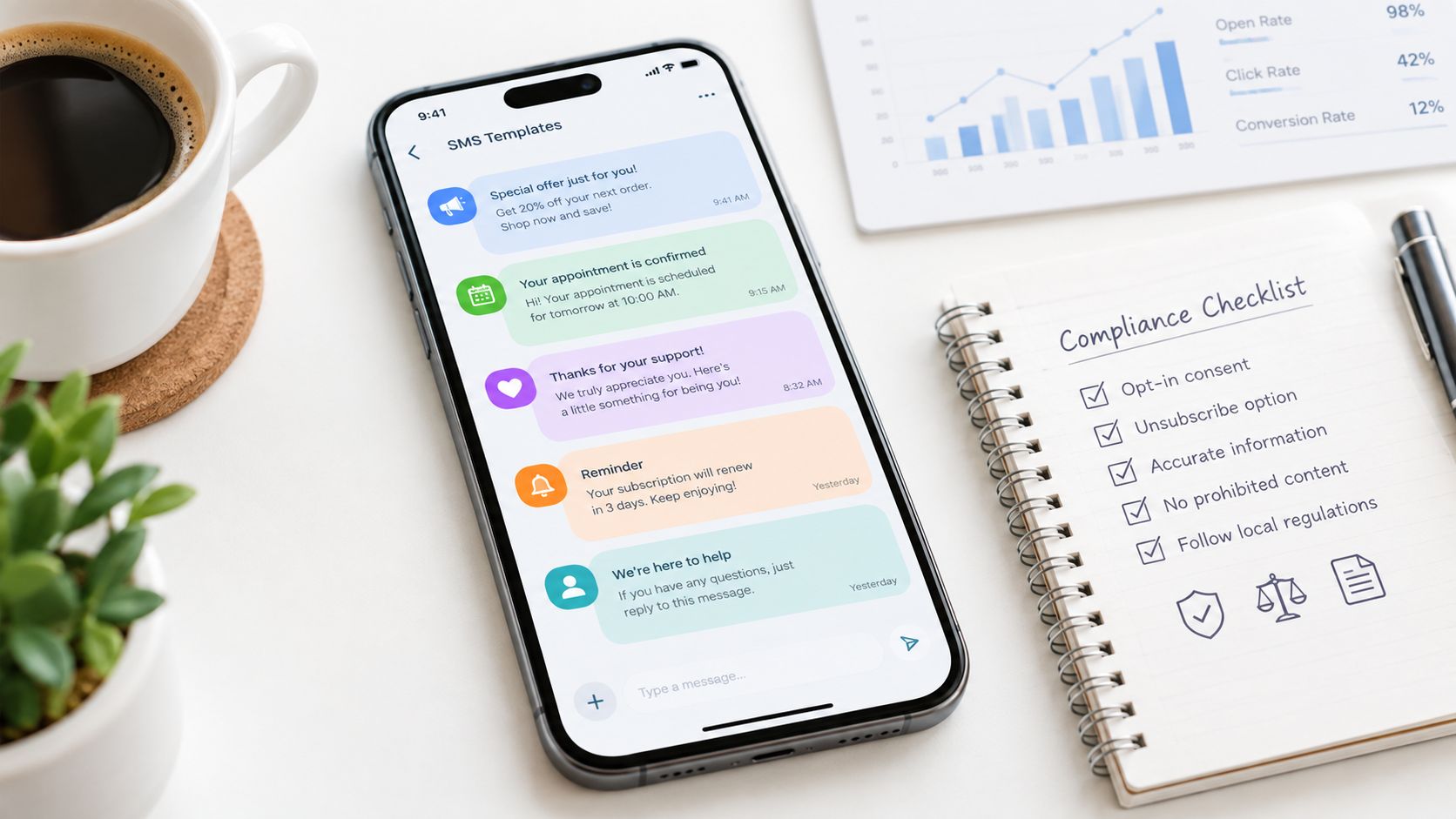


Friday afternoon is where a lot of sms marketing templates go to die. A team writes one promo, pushes it to the full list, then Monday reveals the ugly version of the truth, the template wasn't approved, the send slipped outside permitted hours, and nobody can tie it to orders or pipeline. In India, that's not just a bad campaign, it's a workflow problem, because commercial SMS now sits inside a regulated infrastructure that changes how messages are written, approved, and delivered, and TRAI's 2024 traceability move made that even clearer through registered paths and DLT-based routing TRAI consultation paper TRAI December 2024 press release. The eight templates below cover acquisition-style promotions, cart recovery, appointment reminders, re-engagement, win-back, order updates, VIP access, and B2B follow-up, and each one includes copy variations, the consent and DLT considerations that shape it, and the measurement method that proves whether it paid for itself.
Table of Contents
- 1. Promotional Offer / Flash Sale Alert SMS
- 2. Cart Abandonment Recovery SMS
- 3. Appointment Reminder SMS with Confirm or Reschedule
- 4. Re-engagement SMS for Dormant Subscribers
- 5. Win-Back SMS with Incentive for Lapsed Customers
- 6. Shipping and Order Status Update SMS
- 7. VIP Early Access and Exclusive Offers SMS
- 8. B2B Demo Reminder and Sales Follow-Up SMS
- 8-Template SMS Marketing Comparison
- Turning These Templates Into a Measured SMS Program
1. Promotional Offer / Flash Sale Alert SMS
A promo text should be blunt. It needs one offer, one action, and enough urgency to move the reader before the message feels like noise.
For this template, confirm the promotional DLT category and approved wording before you segment, because a flash-sale blast to a mixed list can fail approval even when the copy is strong. The wrong audience makes the offer look careless, and it also raises consent problems that are harder to fix after the send. Keep the message tight enough to fit the approved structure, then send only to people who match the offer.
What to send and what to check
A clean version looks like this. “Last 24 hrs, 40% off the winter edit, shop now [tracked short link].” If you are writing for a jewellery sale, lead with the actual benefit, not the brand mood.
Practical rule: one offer per message. If the text needs a second deal, it is already too long.
Before sending, check the audience segment, the sender identity, and the route. A recent buyer and a dormant subscriber should not get the same urgency. A commercial SMS without a recognisable brand can look sketchy in a market where scam suspicion is real. The route still has to fit the consent and sender-registration framework described in MessageCentral's India SMS guidance.
For measurement, do not rely on click-through alone. Use a holdout group and a dedicated short link per segment so you can read incremental revenue and cost per order, not just last-click credit. That matters even more in flash sales, where a message can look successful while mostly capturing orders that would have happened anyway.
If you want the signal to be clean, add a segment-level code and keep the offer consistent inside each test cell. That makes the result easier to trust when you compare price-led pushes against no-discount sends.
- Best use case: opted-in checkout subscribers, past buyers, or segmented product fans.
- Consent requirement: promotional consent and preference status matter.
- DLT risk: promotional category, so pre-registration and approved wording structure matter.
- Measurement method: segment-level code plus a holdout group.
2. Cart Abandonment Recovery SMS
Cart recovery works because the shopper already raised their hand. The message is there to remove friction, not restart the sale from zero.
In practice, the first reminder should feel helpful, not needy. “Still want your navy kurta? Your cart's waiting, finish here [link].” If shipping cost or sizing is the actual blocker, address that directly in the next touch instead of repeating the same line twice. The worst cart texts pretend the cart never had a problem.
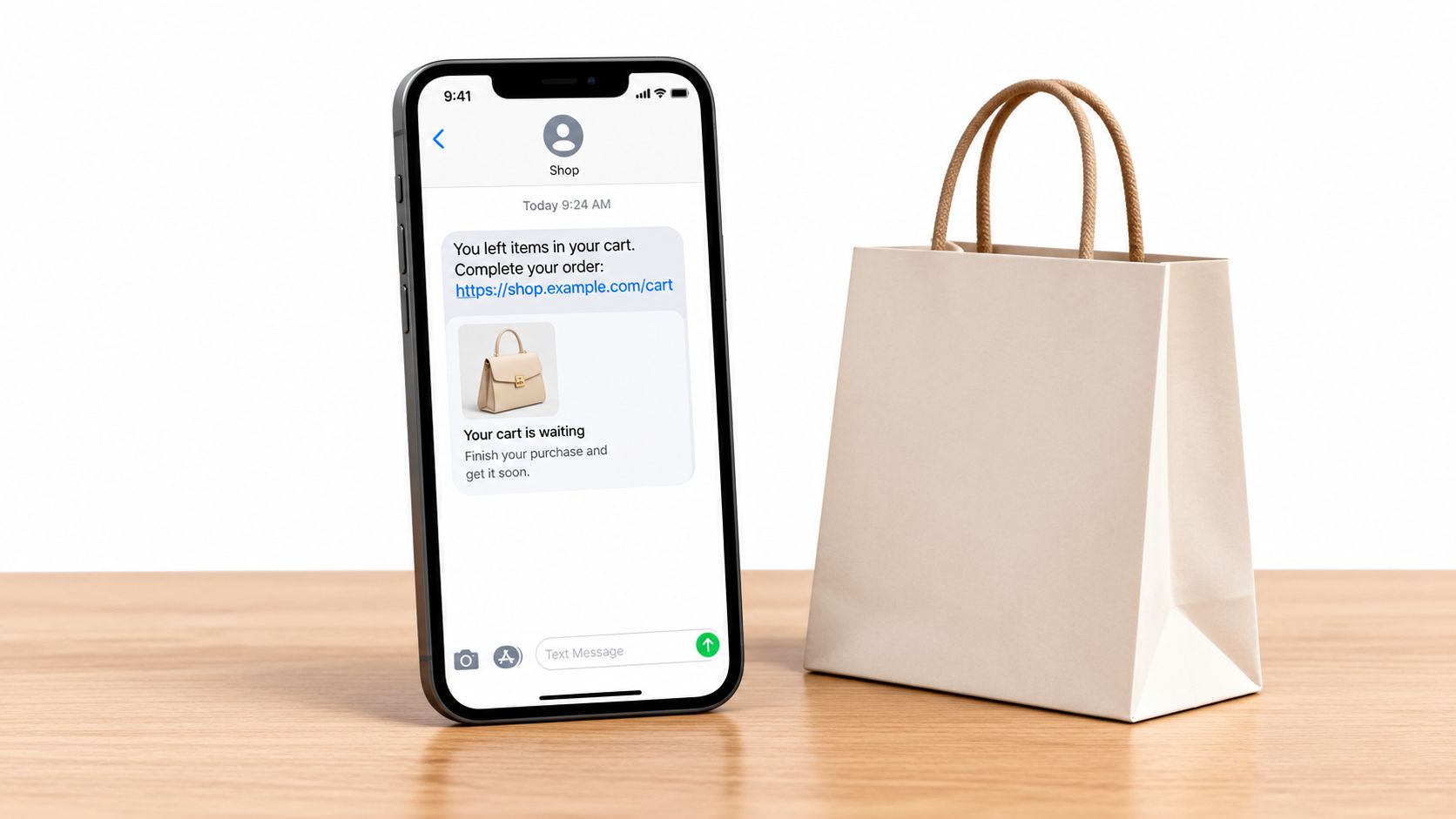
Keep the sequence narrow
The cleanest sequence is one reminder after the shopper has gone quiet, then a second message only if there's a clear reason to send it. If you keep firing, you train people to ignore you. If you discount too early, you train them to abandon carts on purpose.
A few rules hold up across fashion, home goods, and electronics.
- Lead with the item: show the exact product, not a generic “you left something behind.”
- Fix one objection: price, delivery, stock, or returns. Don't stack all four.
- Protect margin: test a small incentive against a no-discount version before you make free shipping the default.
- Suppress purchasers immediately: once the order lands, the cart flow must stop.
Use this template as a recovery tool, not a persuasion contest. The shopper already showed intent.
For compliance, this is usually treated as a triggered transactional or service-style journey only when it is directly tied to the customer's action and consented journey. If you turn it into a broad promotional reminder, it stops behaving like a simple recovery message and starts carrying more consent and category risk. Measure it with a segment-level code tied to cart value, then compare against a holdout that got no reminder at all.
3. Appointment Reminder SMS with Confirm or Reschedule
An appointment reminder has one job, keep the slot from going empty. The message should feel expected, useful, and easy to act on.
“Reminder, Dr. Mehta tomorrow at 11:30 AM. Reply 1 to confirm, 2 to reschedule.” That format works because it gives the customer a clear next step without extra reading. A salon or showroom can use the same structure with a tap-to-reschedule link if the booking system supports it. If the booking can be changed in one reply or one tap, the reminder does its job.
Keep the message short, and the action obvious
Two reminders usually cover the need, one the day before and one closer to the visit. Whether you send both depends on how fast people confirm and whether the second message lowers no-shows or just adds noise. Measure that by lead time and by reminder variant, not by opens or clicks alone.
Keep sensitive details out of the body. A healthcare reminder should identify the appointment clearly without exposing private context in the notification preview. That is a trust issue and a compliance issue.
Use this structure:
- Sender identity: clinic, salon, or consultant name up front.
- Action choice: confirm or reschedule in one step.
- Queue handling: route reschedule replies into a fast response queue.
- Measurement: no-show rate by reminder variant and lead time, compared with a holdout group that got no reminder.
For India, keep the message clearly transactional or service-related. A reminder that starts carrying a discount or cross-sell is no longer just a reminder. If you want to send an upsell, send it later as a separate, consented campaign. Check the consent record before sending, and make sure the DLT template category matches the actual purpose of the message.
4. Re-engagement SMS for Dormant Subscribers
Dormant subscribers are a deliverability problem before they're a revenue problem. If you keep mailing dead air, the list gets noisier and the useful contacts get harder to reach.
A tight re-engagement text asks for one thing only. “We miss you. Still want updates? Reply YES to stay on the list.” That's better than a clever paragraph because the business goal is clarity, not charm. If the contact wants product news, let them say so. If they don't answer, let them go.
Clean the list without turning it into a campaign
This template works best when inactivity windows are defined by category. A fashion brand can't use the same silence threshold as a furniture seller, because purchase cycles differ. The point is to treat inactive subscribers as a segment with its own logic, not as a pile of leftovers.
What usually fails here is the temptation to over-explain. The more text you add, the more it sounds like marketing trying to justify itself. Keep it short and make the response path obvious.
Don't try to win back everyone. Try to identify who still wants to hear from you.
Measurement should focus on active-subscriber rate, not list size. If a large list is mostly stale, it looks impressive and performs badly. A smaller, healthier list is easier to segment, easier to message, and usually cheaper to keep useful.
For consent and DLT handling, re-engagement is the place to review whether the contact's current preference status still supports future sending. If they don't answer after one or two attempts, suppress them. That protects deliverability and keeps the next acquisition campaign from paying for dead contacts.
5. Win-Back SMS with Incentive for Lapsed Customers
Lapsed customers are not a single crowd. A blanket discount treats them that way and burns margin fast.
Start with the last purchase category. “Your favourite running shoes are back in your size, enjoy 15% off this week [link].” That message works because it links the offer to something the customer already bought, not to a random promotion. If the last order was for a different category, keep the reference aligned with that history.
The offer should match the value tier. High-value lapsed customers can justify a stronger incentive. Lower-value customers often only need a reminder about what is new. If you send the same deal to both, you pay more than you need to for people who were never likely to return at that price.
Consent and template rules matter here. Re-opt-in logic can be required before further promotional sends, and DLT template category risk is higher if the message reads like a generic sales blast instead of a targeted win-back. Check the contact's current opt-in status before you send, and suppress anyone who does not respond after one or two attempts.
Measure the result with a holdout group. Lapsed customers often come back for reasons outside the message, so redemption alone can mislead you. Compare the treatment group against the holdout, and look at reactivated revenue by segment, not just click or reply rate.
A practical split keeps the trade-offs clear.
- Tier one: stronger offer, short expiry, direct link.
- Tier two: product reminder or new-arrival message.
- Tier three: stop sending if there is no response.
For a travel company or premium brand, the incentive can be loyalty credit or early access instead of a blunt percentage discount. That protects more brand value. It also gives you a cleaner read on whether the send drove repeat purchase intent or segment-level reactivation.
6. Shipping and Order Status Update SMS
Shipping updates are the SMS messages customers trust most, because they asked for them by buying something. That makes them operational, but also a reputation test.
Keep the copy plain. “Your order #48213 has shipped. Expected delivery, 24 Jun. Track [link].” Send the next update only when the status changes. If the package is delayed, say so early and revise the ETA. That usually cuts support tickets because customers stop guessing.
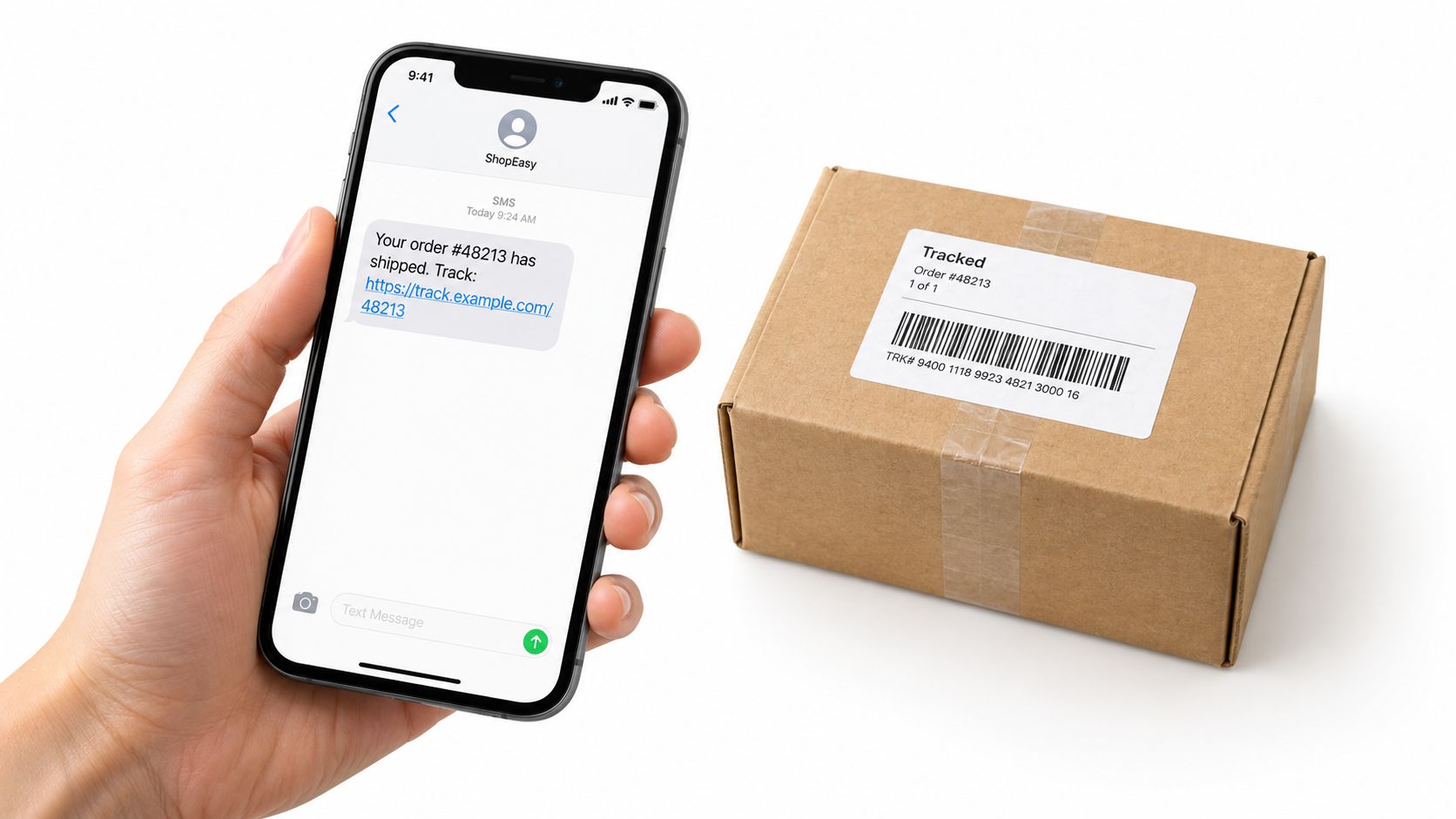
Consent and template rules still apply. Shipping messages can be transactional, but the sender identity, template structure, and trigger need to match that purpose. If the update starts sounding like a sales blast, it belongs in a separate, consented campaign after delivery. Check the contact's opt-in status before you send anything promotional, and keep service traffic out of that stream.
Keep service and sales apart
Use only the events the customer needs, confirmed, shipped, out for delivery, delivered. Extra alerts add clutter and train people to ignore the thread. Watch template variable errors each week. A broken tracking link or missing order ID makes the whole flow look careless.
For measurement, use support ticket volume, delivery confirmation issues, and link reliability. A holdout group helps here too. Delivery messages can reduce “where is my order” contacts, but you still need a comparison group to see whether the reduction came from the SMS or from the carrier doing its job. Segment-level tracking is useful as well. It shows whether delays, late deliveries, or high-value orders need different wording.
A clean post-delivery flow stays simple:
- Delivered message: confirms the package arrived.
- Separate follow-up: requests a review or shares a product-care tip.
- Cross-sell timing: happens later, in another message family.
- Measurement: support ticket volume, delivery confirmation issues, and link reliability.
For India's more regulated commercial environment, this type of message should stay clearly operational and traceable. The sender identity, template structure, and event trigger need to match. If they do not, the message can land in the wrong bucket before it even leaves your stack.
7. VIP Early Access and Exclusive Offers SMS
VIP SMS should feel like a private desk, not a noisy blast. If everyone gets it, nobody feels special.
The strongest VIP text names the access right away. “You're invited to our private preview of the new collection, 24 hrs before public launch [link].” A beauty brand can swap in early access or a complimentary gift for Gold-tier members. The tone should be confident and restrained, not desperate.
Let value do the work
Define VIP status by value and recency, then keep the message frequency low. If you message the same top customers too often, exclusivity turns into fatigue fast. A small number of highly relevant sends is better than a high volume of weak ones.
Personal names and past purchases help, but only when the reference sounds real. If the brand says “because you love our gold rings” to someone who has never bought jewellery, the message collapses instantly. That's why CRM hygiene matters more here than clever copy.
Exclusivity is a promise. If the segment is sloppy, the promise breaks.
For measurement, look at revenue per VIP and retention, not just response rate. VIP audiences can click enthusiastically and still be over-contacted. The key question is whether the offer deepens loyalty without training the best customers to expect constant promos.
If you add a reply-to-talk option for high-touch service, route it into a real sales or CRM workflow. That keeps the VIP lane from becoming a dead end where people reply and hear nothing back.
8. B2B Demo Reminder and Sales Follow-Up SMS
A demo reminder should behave like a calendar nudge, not a pitch deck. The moment it starts explaining the product in detail, it misses the job.
“Hi Anita, confirming our demo tomorrow at 3 PM IST with Rahul from TVL. Reply 2 to reschedule.” That works because it is specific, easy to act on, and tied to one next step. For post-webinar follow-up, send one asset or one action. If the lead needs context, keep that for email or WhatsApp.
Consent and template handling matter here. In many cases, the safest path is an existing business relationship or a clear opt-in path, because the message is still one-to-one and operational. If you turn the same send into broad promotional outreach, the review standard gets tighter and the message may need a different template category. Check the trigger, the audience, and whether the text still reads as logistics before you send.
Measure the follow-up, not just the reply
B2B teams get better results when SMS sits inside the CRM flow. The rep sends the text, the CRM logs it, and the next touch depends on the lead's response. That lets you measure pipeline movement, not just reply volume. A holdout group is useful here. Keep one matched segment out of SMS follow-up, then compare response, booked meetings, or stage progression.
Keep the channel rules simple.
- Under 160 characters: short enough to scan fast on a lock screen.
- Named sender: identify the rep and company.
- Fast SLA: send within a couple of hours of the demo request or webinar action.
- Channel discipline: use SMS for logistics, use email or WhatsApp for richer detail.
Two or three touches with no channel change starts to feel robotic. Missing CRM logs creates the opposite problem. You cannot tell whether SMS moved the lead or just added noise. That is the essential check before sending. Confirm the stage, confirm the owner, and confirm that every message will be visible in the pipeline record.
8-Template SMS Marketing Comparison
| Template (Use case) | Core features | Key metrics & quality (★) | Business value (💰) | Target audience (👥) | Unique edge (✨ / 🏆) |
|---|---|---|---|---|---|
| Promotional Offer / Flash Sale Alert SMS | Time‑bound single offer, 1 CTA, DLT pre‑approved template, branded sender ID, short trackable link | ★ ~90% open; CTR, CPO, unsubscribe rate | 💰 Fast incremental orders; low production cost; measurable uplift vs holdout | 👥 D2C shoppers, sale‑seekers, segmented audiences | ✨ Immediate reach for flash conversion; 🏆 best for short‑window ROI |
| Cart Abandonment Recovery SMS | Triggered by cart event, direct cart link, product detail, 1–2 message sequence, personalised | ★ High conversion from warm intent; recovered cart rate, revenue/recipient | 💰 Lowers effective CAC by recovering paid‑media traffic | 👥 Warm site abandoners, e‑commerce shoppers | ✨ Recovers high‑intent demand; direct attribution to recovered carts |
| Appointment Reminder SMS with Confirm or Reschedule | Booking‑triggered (24h/2h), date/time/location, reply codes or reschedule link, transactional template | ★ Very high open; no‑show rate ↓, confirmation & reschedule rates | 💰 Protects revenue & staff utilisation; reduces manual calls | 👥 Clinics, salons, service visits, showrooms | ✨ Reduces no‑shows via simple confirm/reschedule flows; 🏆 strong operational ROI |
| Re-engagement SMS for Dormant Subscribers | Inactivity trigger (90–180d), single ask or preference choice, low frequency, suppression step | ★ Typically low response; reactivation rate, active‑subscriber rate, complaint rate | 💰 Protects deliverability and ad ROI by cleaning list | 👥 Brands with long lifecycles, lifecycle teams | ✨ List cleansing + preference capture to improve future targeting |
| Win‑Back SMS with Incentive for Lapsed Customers | Segment by last purchase/value, personalised past‑purchase reference, targeted incentive, promo code | ★ Moderate–high conversion; reactivation rate, discount cost per reactivated | 💰 Cheaper than new acquisition; lifts LTV when targeted | 👥 Lapsed customers (6–12+ months), retention teams | ✨ Tiered incentives by value; measurable reactivation with holdouts |
| Shipping and Order Status Update SMS | Logistics‑triggered, order ID + status + tracking link, transactional template, short factual copy | ★ Very high open & read; support ticket reduction, tracking CTR | 💰 Reduces support costs; builds trust and repeat purchase | 👥 E‑commerce, quick commerce, logistics operators | ✨ Trusted operational touchpoint; 🏆 highest customer acceptance |
| VIP Early Access and Exclusive Offers SMS | Audience limited to high‑LTV, personalised greeting, early‑access window, single‑use/tiered links | ★ High conversion & AOV; revenue per VIP, retention rate | 💰 Drives premium revenue from small segment; strengthens loyalty | 👥 Top customers, loyalty tiers, premium segments | ✨ Real exclusivity + concierge reply option; boosts perceived value |
| B2B Demo Reminder & Sales Follow‑Up SMS | CRM/meeting triggered, rep name + calendar/reschedule link, short professional tone, multi‑channel cadence | ★ High confirmation & show‑up; time‑to‑first‑follow‑up, pipeline influenced | 💰 Speeds pipeline progression; improves meetings→opportunity ratio | 👥 B2B sales teams, SDRs, account executives | ✨ Fast, personal sales follow‑up integrated with CRM; improves sales velocity |
Turning These Templates Into a Measured SMS Program
The common mistake is treating sms marketing templates like a copy library. They are not. They're operating assets, and each one needs a consent trail, a DLT category decision, a sender identity, and a measurement plan before anyone types the first line.
The fastest way to get value is to start with the templates tied to revenue or operational cost. Cart recovery, appointment reminders, and shipping updates usually earn a place first because they sit close to money and customer experience. Then check the approval state, the consent record, and the template family before launch. That matters more in India than in a loose global playbook, because commercial traffic now has to live inside the approved routing and traceability framework TRAI December 2024 press release.
After that, build a measurement habit around honesty. Use a holdout group where you can, or a segment-level code where the flow is more operational. Don't let delivery counts or click counts stand in for business impact. The point is to know whether the message created a sale, reduced a support burden, lifted retention, or merely looked active on a dashboard.
The strongest programs also keep template families separate. Promotional, transactional, authentication, and service-recovery journeys should not share wording just because the same team writes them. That separation makes approval cleaner and performance easier to diagnose. It also helps when you need to compare one journey against another without confusing the results.
A practical next step is simple. Pick one template, define one success metric, run it for four weeks, and feed the result into the next segment brief. If the cart text lifts incremental orders, scale it carefully. If the reminder reduces no-shows, keep the flow tight. If a promo drives clicks but not revenue, rewrite it before you increase frequency.
Where teams want help tying SMS to WhatsApp, paid media, and landing pages, TVL Media runs CPaaS messaging programs alongside campaign measurement, so the message, the destination, and the outcome stay connected.
TVL Media helps brands turn SMS from a one-off send into a measured revenue and operations channel. If you want help building compliant sms marketing templates, connecting them to WhatsApp and landing pages, and reading the results against cost per order or pipeline, visit TVL Media.
Produced via Outrank tool

